Can You Spot the Better Study Habit?
A study-skills quiz with realistic choices about notes, practice, breaks, sleep, and review timing for learners of many ages.
Can You Spot the Better Study Habit?
Good study advice often sounds simple after someone explains it. The hard part is choosing the better habit when you are tired, behind schedule, or staring at a chapter that refuses to stick. This quiz uses ordinary choices rather than perfect-student fantasies.
The explanations are educational and general. They do not replace advice from a teacher, tutor, learning specialist, or healthcare professional. For evidence-informed learning background, the Institute of Education Sciences has practice guides for educators and students: https://ies.ed.gov/ncee/wwc/PracticeGuides.
Question 1: The night before a test
You have two hours. Which plan is usually stronger?
A. Reread the entire chapter twice.
B. Spend most of the time answering practice questions, then review weak spots.
C. Highlight every paragraph in a new color.
D. Rewrite the title page neatly.
Answer: B. Practice questions force retrieval. Rereading can feel productive because the material looks familiar, but familiarity is not the same as recall.
Question 2: Flashcards
Which flashcard habit is better?
A. Flip the card quickly if you almost know it.
B. Try to answer fully before looking, even if it feels slow.
C. Keep only easy cards because they build confidence.
D. Read the answer side first.
Answer: B. The attempt matters. Struggling to retrieve the answer can strengthen memory more than simply recognizing it.

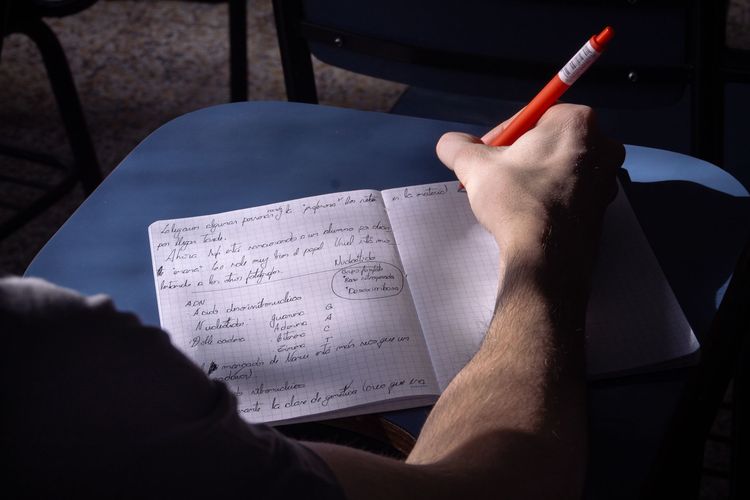
Question 3: Taking notes in class
Which note is more useful later?
A. A copied sentence with no context.
B. A short explanation in your own words plus one example.
C. A decorative heading with no details.
D. A screenshot you never label.
Answer: B. Notes should help future-you rebuild the idea. Own words and examples expose what you understand and what you do not.
Question 4: Break timing
After 45 focused minutes, what is a reasonable break?
A. Five to ten minutes away from the work, then return.
B. A two-hour video session with autoplay on.
C. Checking messages until the study mood disappears.
D. Starting a different difficult assignment immediately.
Answer: A. Breaks are not failure. A short reset can protect attention. The trick is making the break easy to end.
Question 5: Learning vocabulary
Which plan is stronger across a week?
A. Study the list once for two hours.
B. Review the list for shorter sessions across several days.
C. Read the list while doing three other tasks.
D. Wait until the words appear on the test.
Answer: B. Spacing helps. Repeated contact over time is usually better than one large session, especially for vocabulary, formulas, and definitions.
Question 6: When you get an answer wrong
What should you do first?
A. Mark yourself as bad at the subject.
B. Ask why the wrong answer was tempting.
C. Erase the question and move on.
D. Avoid that topic forever.
Answer: B. Mistakes can be useful data. A wrong answer may reveal a vocabulary gap, a careless sign error, a confused concept, or a weak memory cue.
Question 7: Group study
Which group plan is most likely to work?
A. Everyone silently rereads for two hours with no goal.
B. Each person teaches one concept, then the group asks questions.
C. The strongest student does all the explaining while others listen passively.
D. The group meets with no materials.
Answer: B. Teaching exposes gaps. Questions keep the session from becoming a performance by one person.
Question 8: Sleep and studying
Which statement is most sensible?
A. Sleep never affects learning.
B. Sleep can matter for attention and memory, so all-night cramming has a cost.
C. Studying is useless unless you sleep perfectly.
D. Caffeine replaces rest completely.
Answer: B. Sleep is not magic, but it is part of learning. The CDC explains that sleep affects health, attention, and functioning: https://www.cdc.gov/sleep/about/index.html.
Result guide
0-3 correct: Focus on two habits first: practice questions and shorter reviews across days.
4-6 correct: You know several strong habits. Tighten the parts where comfort disguises itself as learning.
7-8 correct: You are choosing habits that usually hold up under pressure.
A realistic weekly plan
Monday: Preview the topic and write three questions.
Tuesday: Learn the first half and make rough notes.
Wednesday: Answer practice questions without notes.
Thursday: Fix weak spots and explain one concept aloud.
Friday: Mix old and new questions.
Weekend: Do a shorter review, then stop before the work becomes pointless.
A better study habit is usually less dramatic than people expect. It asks you to recall, space, check, and rest. None of that looks heroic. That is the advantage.
Why easier does not always mean better
Many weak study habits feel good while you are doing them. Rereading feels fluent. Highlighting feels active. Copying notes looks productive. The problem appears later, when the book is closed and the question asks for recall, comparison, or explanation. Stronger habits often feel slower because they expose what you do not know yet.
That uncomfortable moment is useful. A blank answer during practice is cheaper than a blank answer during the test. A missed flashcard tells you where to return. A bad explanation shows which part of the idea is still foggy.
How to use this quiz after taking it
Choose one answer you missed and turn it into a rule for the week. If you missed the spacing question, schedule three short reviews. If you missed the notes question, rewrite one page of notes in your own words. If you missed the group-study question, ask your group to teach concepts instead of silently rereading.
Do not overhaul every habit at once. Students often build a grand new system, use it for two days, then abandon it. One better habit repeated for a week is more useful than six perfect habits written in a planner.
For parents and tutors
When helping a learner, ask for evidence of recall rather than evidence of time spent. “Show me what you can answer without notes” is more useful than “How long did you study?” Time matters, but it can hide passive work. Short, focused retrieval can beat a long session that never asks the brain to produce an answer.
Also watch for overload. If a learner is exhausted, hungry, or anxious, the next best step may be a break, a snack, or help dividing the task. Better study habits work best when they respect human limits.
The two-question reset
When a study session drifts, ask two questions: What should I be able to do after this? How will I prove I can do it without looking? Those questions turn a vague plan into a testable one. If the goal is vocabulary, proof may be defining the word and using it in a sentence. If the goal is maths, proof may be solving three mixed problems without hints.
This reset works because it removes the comfortable middle ground where studying means sitting near materials. It asks for output. Output is where learning becomes visible.
After the score, choose one small repair
A quiz is only useful if it changes the next study session. Pick one answer that surprised you and turn it into a small repair. If you usually reread notes, add five retrieval questions. If you cram late at night, move ten minutes of review to the afternoon. If group study becomes chatting, assign each person one explanation to teach back.
The repair should be small enough to repeat tomorrow. Students often abandon good advice because it arrives as a personality makeover. Better study habits usually start as a tiny change in timing, feedback, or practice. Once that change feels normal, add another.