
A 20-Minute Critical Thinking Warm-Up for Better Studying
A guided educational challenge that uses short prompts, explanation checks, and reflection to help students study with more attention.
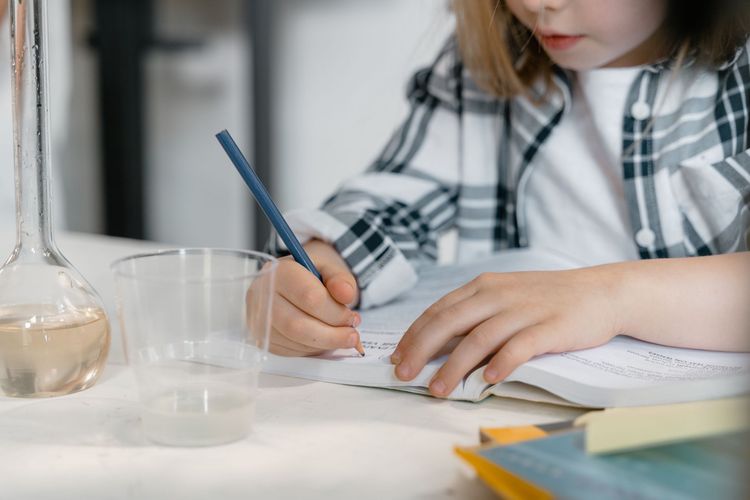
A 20-Minute Critical Thinking Warm-Up for Better Studying
Studying often begins too late in the process. A student opens a book, highlights several lines, copies a definition, and feels busy. The harder work is deciding what a claim means, what evidence supports it, what is still confusing, and how to recall it later without looking. This warm-up is designed for that first twenty minutes.
This is general educational guidance, not a guaranteed learning plan for every student. Different learners may need different supports, especially with language learning, disability accommodations, exam anxiety, or formal coursework requirements. Retrieval practice is widely discussed in education; for a readable introduction, see Edutopia’s overview of <a href=“https://www.edutopia.org/article/retrieval-practice/”>retrieval practice</a>.
Set the rules before you start
Choose one topic, one notebook page, and one timer. Put away unrelated tabs. The goal is not to finish the whole chapter. The goal is to wake up the part of your mind that checks meaning. Write the topic at the top of the page in plain language, such as “why rivers flood,” “photosynthesis basics,” or “causes of World War I.”
Use three columns: What I think I know, What the source says, and What I can explain without looking. These columns prevent passive copying. They make you compare memory with evidence and then test whether you can explain the idea independently.
Minute 0-3: prediction
Before reading, write five things you expect to be true about the topic. They can be rough. For a science topic, predict causes, parts, or examples. For a history topic, predict people, pressures, dates, or consequences. For literature, predict character motives, themes, or conflicts.
Prediction works because it gives your mind hooks. When the reading confirms, corrects, or complicates a prediction, you notice more. Do not worry about being wrong. A wrong prediction that gets corrected is useful because it marks a boundary between assumption and evidence.
Minute 3-8: read for claims, not decoration
Read a short section and underline only claims that answer your topic question. A claim is something the author wants you to believe or understand. Dates, names, and terms matter, but they should connect to a claim. If the topic is “why plants need light,” a claim might be that light energy helps drive photosynthesis. If the topic is “why an empire weakened,” a claim might connect taxes, war, leadership, or trade.
Write two claims in your second column. Then write the evidence or example attached to each claim. This step is where many students discover they highlighted a sentence without knowing what job it performed.
Minute 8-12: explain it badly, then improve it
Close the source and explain the idea in ordinary language. Let the first version be clumsy. For example: “The river floods because too much water arrives and the channel cannot hold it, and flat land nearby gets covered.” Then improve it with one precise word from the source, such as basin, floodplain, rainfall, snowmelt, or drainage.
This is not about sounding academic immediately. It is about building a bridge between everyday understanding and course vocabulary. If you cannot explain an idea badly, you probably cannot explain it well yet.
Minute 12-15: ask three pressure questions
Now challenge the explanation. Ask: What would be an example? What would be a non-example? What might someone misunderstand? These questions force the idea to stand up in different directions.
For the river example, an example might be heavy rain upstream. A non-example might be ocean tides if the lesson is about inland rainfall flooding. A misunderstanding might be thinking every flood is caused by the same factor. The pressure questions turn a memorized sentence into a usable concept.
Minute 15-18: retrieve without looking
Cover the page and write the answer again from memory. Keep it short: three to five sentences or a labeled mini-diagram. Then uncover the notes and mark what you missed. Missing something is not failure. It is the study signal you were looking for.
If you missed a key term, write it once in context rather than copying it ten times. If you missed a causal step, draw arrows. If you mixed up two terms, make a tiny comparison table. Retrieval should lead to repair, not punishment.
Minute 18-20: choose the next action
End by choosing one next action: reread one paragraph, answer three practice questions, teach the idea to someone, make flashcards from missed terms, or move to the next section. The warm-up should create direction. If the next action is “study more,” make it more specific.
A useful final sentence is: “The part I understand is ___, and the part I need to check is ___.” This separates progress from confusion. Students often feel lost because they treat the whole topic as one foggy object. Naming the clear part and the unclear part makes the next step smaller.
Common mistakes
Do not use the warm-up to decorate notes. Color can help organization, but it cannot replace thinking. Do not choose a huge topic like “biology” or “the French Revolution.” Choose a question small enough to explain in twenty minutes. Do not skip retrieval because it feels uncomfortable. That discomfort is often the moment learning becomes visible.
Also avoid turning every prompt into a perfect paragraph. Bullets, arrows, rough diagrams, and short sentences are allowed. The warm-up is a thinking tool, not a display piece.
Make it reusable
The same routine works for many subjects because it follows a simple pattern: predict, read for claims, explain, pressure-test, retrieve, choose the next step. Once students learn the pattern, they can adapt it for a textbook, article, lecture video, museum visit, or exam review sheet.
The value is not that twenty minutes solves every study problem. The value is that twenty minutes can prevent shallow study from taking over the whole session. Start by thinking, and the rest of the study block has a better chance of becoming real learning.
Adapt it for group study
In a group, give each person a different role for the same twenty-minute routine. One person identifies claims, one finds evidence, one asks pressure questions, and one writes the retrieval answer without looking. Rotate roles after each topic so no one becomes only the note-taker or only the speaker.
Group study often fails when it becomes shared confusion or social comfort. Roles make the session active. They also expose gaps quickly. If the evidence finder cannot support the claim, the group needs to return to the source. If the retrieval writer cannot explain the topic, the group needs a clearer model, not more highlighting.
Use it after class, not only before exams
The warm-up is especially useful within twenty-four hours of a lesson. At that point, the material is familiar enough to restart but not secure enough to trust. A short retrieval attempt shows which parts were understood in class and which only felt clear because the teacher, slides, or examples were still visible.
For exam preparation, combine several warm-ups into a review map. Each page should end with one unresolved question and one next action. After a week, those unresolved questions become a targeted study list. This is more efficient than rereading every page with equal attention.
For younger learners, shrink the prompts
The same method can work for younger students if the prompts are smaller. Instead of “write five predictions,” ask for two. Instead of three pressure questions, ask for one example and one question. The important habit is not the number of prompts; it is the movement from guess, to evidence, to explanation, to recall.
Adults helping a student should avoid taking over the thinking. Ask, “Where did the source say that?” or “Can you say it another way?” rather than supplying a polished answer. The warm-up builds independence when the learner does the retrieval, even if the first version is incomplete.